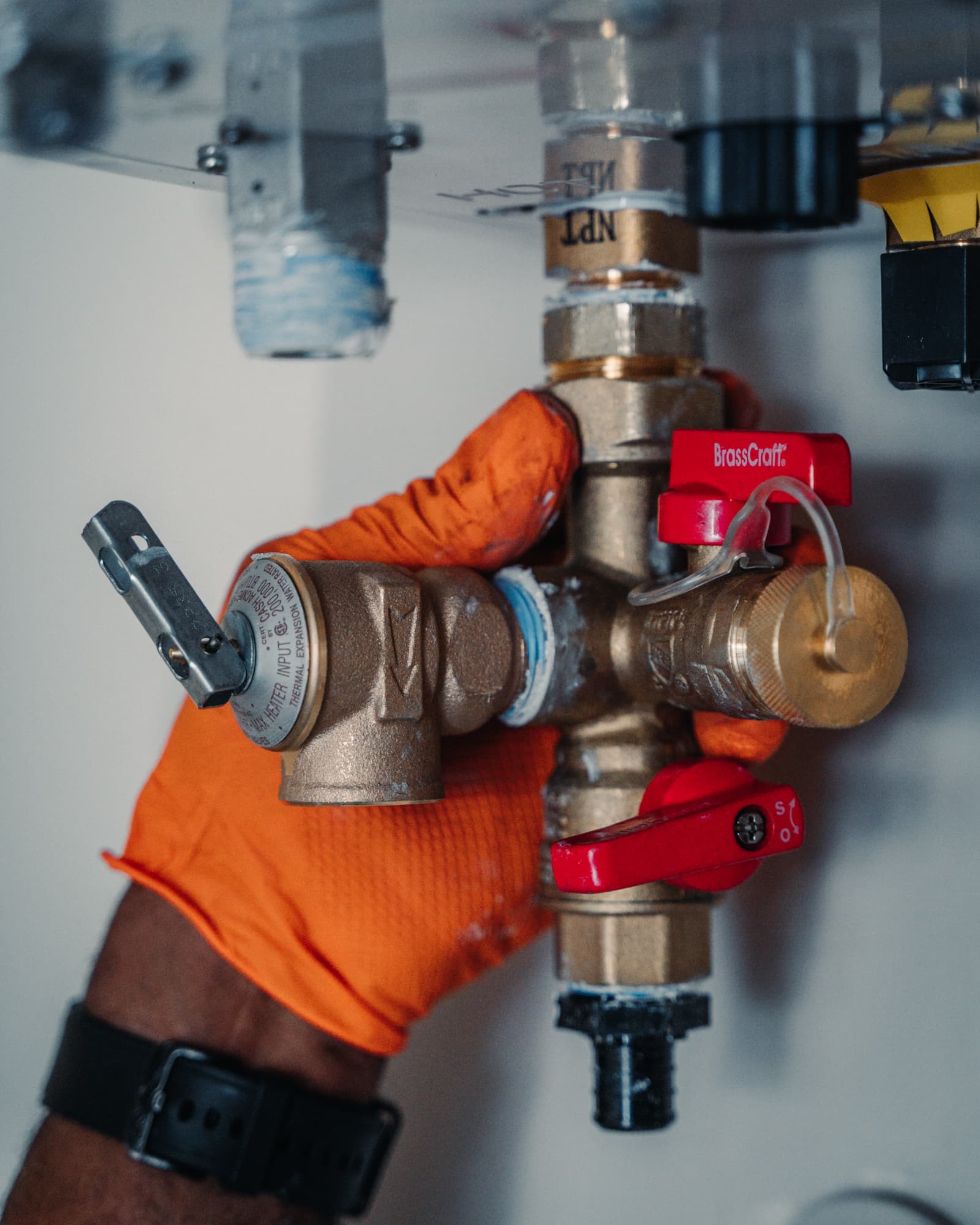
If you've ever run out of hot water mid-shower or waited forever for the tap to warm up, you've probably wondered about tankless water heaters. These units have become increasingly popular in Fort Worth homes, and for good reason. Here's how they work and whether one might be right for your family.
How Traditional Tank Water Heaters Work
A traditional water heater stores 40-80 gallons of water in a large tank and keeps it hot 24/7 — even when you're asleep or at work. That constant heating uses energy around the clock, which is why tank water heaters account for about 20% of your home's energy costs.
How Tankless Water Heaters Are Different
A tankless (or "on-demand") water heater doesn't store water at all. Instead, when you turn on a hot water tap, cold water flows through the unit and is heated instantly by a powerful gas burner or electric element. The moment you turn off the tap, the unit shuts down. No standby energy loss, no running out of hot water.
The Key Components
Inside a tankless water heater, you'll find a flow sensor that detects when water is moving, a control board that manages the heating process, a heat exchanger where the actual heating happens, and a temperature sensor to ensure precise output. Modern units can raise water temperature by 70°F or more as it passes through in seconds.
Advantages of Going Tankless
Endless hot water — Since water is heated on demand, you'll never run out. Take back-to-back showers, run the dishwasher and washing machine simultaneously — the hot water keeps flowing.
Energy savings — The Department of Energy estimates tankless water heaters are 24-34% more energy efficient than tank models for homes that use 41 gallons or less of hot water daily. Even for heavy usage (86+ gallons/day), they're still 8-14% more efficient.
Space savings — A tankless unit mounts on a wall and is about the size of a small suitcase. You get back all the floor space that a bulky 60-gallon tank was occupying.
Longer lifespan — Tank water heaters typically last 10-15 years. Tankless units can last 20+ years with proper maintenance.
Things to Consider
Upfront cost — Tankless water heaters cost more to purchase and install than tank models. However, the energy savings and longer lifespan often offset this over time.
Flow rate limitations — Each unit has a maximum flow rate (measured in gallons per minute). For larger homes with high simultaneous demand, you may need a larger unit or multiple units.
Gas line requirements — Gas-powered tankless units require a larger gas line than traditional water heaters. Your installer will need to evaluate your existing gas supply.
Is Tankless Right for Your Home?
The best choice depends on your household size, water usage patterns, budget, and available space. Smaller households with moderate usage see the biggest return on investment. Larger families may benefit from a high-capacity gas-powered unit.
At Relentless Home Services, we install both tank and tankless water heaters. We'll help you evaluate your needs and recommend the best option for your home and budget. Call us at (817) 271-2999 for a free consultation.
Need Help? We're Here For You
Our team is available for questions, advice, and professional service.
More Articles
10 Awesome Plumbing Hacks Every Homeowner Should Know
Discover simple plumbing tricks that can save you time and money. From preventing clogs to fixing minor leaks, these tips are essential for every homeowner.
Benefits of Installing a Water Softener in Your Fort Worth Home
Hard water can damage your plumbing and appliances. Learn how a water softener can protect your home and improve water quality.
How to Avoid Frozen Pipes This Winter
Frozen pipes can cause major damage. Learn how to protect your plumbing during cold Texas winters.